Lekcja #17 Patsy Cline – Back in Baby’s Arms (1969)

Lekcja #17 Patsy Cline – Back in Baby’s Arms (1969)

Zadanie 0. Wydrukuj plik PDF, który znajdziesz pod tym linkiem, lub kontynuuj on-line.

Pobierz plik z darmową lekcją w PDF: Patsy Cline – Back in Baby’s Arms (1969)

Zadanie 1. Wysłuchaj piosenki z youtube jednocześnie czytając tekst. O czym mówią słowa?

CHORUS:  I’m back in baby’s arms

How I __________________ those lovin’ arms

I’m back _____________________ I belong

Back in baby’s arms


Don’t ___________________ why we quarreled

We never did __________________

___________we found out how it hurts

I bet we never quarrel ______________

CHORUS: I’m back…

Thought I didn’t ___________________his love

‘Til he took it __________________

Now I’m back __________________ I belong

And in my baby’s arms I’m gonna _________________

Zadanie 2. Uzupełnij luki w piosence słowami poniżej.

stay, missed, where (2x), before, anymore, since, need, away, know

Zadanie 3. Przeczytaj komentarze. Czy zgadzasz się z nimi?

  • Patsy Cline’s personal life (1932–1963)

                    In 1953, Patsy married Gerald E. Cline, thus picking up [1]the last name she would keep for the rest of her life. Gerald, however, she chose not to keep. Encyclopedia Virginia reveals that she had an affair with Bill Peer, but she broke things off with him and separated from her husband in 1955. By 1957 she’d divorced the latter in time to marry her new beau[2], a linotype operator named Charles Allen Dick. (Needless to say, she passed on adopting that last name for professional reasons.)

                    After Patsy and Charles wed[3], she found herself back to scraping[4] by, performing small local gigs as her new husband served a stint[5] in the army, stationed at Ft. Bragg in North Carolina. As Patsy had a baby to care for (the first of two kids she and Charles would have), she was unable to go on tour. Once Charles’ enlistment was up, though, the couple relocated to Nashville where her star once again began to shine

  • Patsy Cline’s tragic death

    Early in the morning on March 5, 1963, Patsy and two fellow Opry stars, Cowboy Copas and Hawkshaw Hawkins, were flying back to Nashville from a Kansas City benefit concert. The small plane they flew in was piloted by Randy Hughes, who was himself an Opry session guitarist and the son-in-law of Copas as well as being Patsy’s manager. Shortly after taking off from a refueling [6]stop, Hughes lost control of his Piper PA-24 Comanche due to poor visibility and the plane crashed outside of Camden, Tennessee. There were no survivors.

                    There was a memorial service in Nashville for all four performers lost in the crash, where the Wilmington Star News relates that June Carter was in tears and fans paid tribute with floral arrangements shaped like musical instruments, cowboy hats, and boots. After this service, Patsy’s remains were returned to her hometown of Winchester for burial.

Things You Should Never Do After a Fight With Your Partner

         It’s completely normal — and healthy — for couples to argue. You’re two separate people, and you’re going to have different opinions sometimes. You might have heard of some of those classic techniques for how to fight fair, like only using statement starting with “I” or trying not to call names.

                But what you might not realize is that how you act after a fight can be as important to your relationship as what you say in the heat of the moment. Here are some reactions to avoid, whether you’re totally over it or still working on that whole forgive-and-forget thing.

1.Don’t disrespect your partner’s need for space.

“In a fight, when one partner is overwhelmed, they may not be able to process their thoughts,” Dr. Megan Flemming, clinical psychologist and certified sex therapist, tells Woman’s Dat. “Which is why it’s important to respect when someone says ‘I need a break.'” It can be natural to feel anxious if your partner needs some time to cool off and collect their thoughts — if this happens, take a few deep breaths and think about how’d you want to be treated if the roles were reversed. “Understand that it’s not personal,” says Dr. Flemming.

  1. Don’t have an all-or-nothing mentality.

After a heated argument with your partner, try to keep an open mind. In the midst of a fight, it can be easy to slip into black-or-white thinking. Dr. Flemming says using terms like “you always” or never” will never solve an argument, so it’s important to take a step back once things have cooled off to consider the argument from your partner’s point of view.

3.Don’t give them the cold shoulder.

If you need some space after a fight, that’s completely fine, as long as you tell them. “One of the biggest mistakes people make after an argument is stonewalling[7],” Rachel A. Sussman, a licensed psychotherapist and relationship expert in New York City, tells Woman’s Day. If you brush your partner off or ignore them, they may think you’re punishing them, which may make them hold back on telling you how they feel in the future. Instead, say, “My emotions don’t recede as quickly as yours, but give me 24 hours and I’m sure things will be fine. If not, we can discuss more.”

  1. Don’t keep their words in your arsenal.

You know the saying, “what happens in Vegas stays in Vegas”? Whatever your partner says during a fight should stay there. “List-makers never tell their partners what bothers them in the moment,” =Michelle Golland, PsyD, a clinical psychologist in Los Angeles, tells Woman’s Dat. So if they say something during the fight that bugs[8] you, tell them their words are frustrating you. If their fighting words annoy you the next day, give yourself some breathing room instead of approaching them again so soon. Bringing up an argument too often can lead to talking in circles, not a resolution.

  1. Don’t just say, “I’m sorry” if they’re still hurt.

That says, “I’m sick of this. Leave me alone. I want to do something else,” Laurie Puhn, a couples mediator and author of Fight Less, Love More, tells Woman’s Day. “What you want to say is, ‘I’m sorry for…’ and explain what you’re talking about. The second part of the apology is, ‘In the future, I will…’ and fill in the blank with how you won’t make the mistake again.”

  1. Don’t make excuses for why you fought.

There are a million things on which you could blame[9] an argument: a bad day at work, a headache, a restless night. In fact, a University of California Berkeley study found that couples who don’t get enough sleep are more likely to fight. Still, passing the blame isn’t fair to your or your partner. “Fights are about information,” Dr. Golland says. “If you’re angry, sad or hurt, that’s information your husband needs to know.” The next time you have a bad day at work, send a warning text before you get home, Dr. Golland suggests. That way, they know that you may be more irritable[10].

How Much Space Is TOO Much Space In a Relationship?


There are some phrases that can send a chill down your spine when you hear them from your partner—and if “We need to talk” is as bad as it gets, “I need some space” isn’t far behind. But the truth is, space isn’t a bad thing, even in a romantic relationship. It may make you feel a little panicky[11] if your partner says that they need some breathing room, but space can be a positive force in a relationship. In fact, it can be a great thing.

What Is Personal Space in a Relationship?

Personal space in a relationship means you’re taking time to put yourself first and do things that are just for you—choices that will make you feel great about yourself, putting you in a better mindset[12] to take care of your relationship.

The trick is to get the balance right. If your partner says they need space in your relationship, something has gone a little wrong—either with the partnership or just in their own life. So, whether you’ve been together for two months or 20 years, you need to take it seriously. The good news is that it’s an easy enough problem to fix—as long as you can balance giving them space with making sure that you don’t drift apart[13]. If you do it right, you may find that having a little distance makes you feel more grateful for each other and, ultimately[14], brings you closer together.

So how much space is too much? Here’s what you need to consider.

Why Do They Need Space?

The first thing to do is talk to your partner about why they need space. Even if you feel defensive or strange about it, remember that it’s a totally normal, reasonable request for them to make—so make sure that you question it with genuine curiosity rather than getting defensive[15]. It may be that they’re really stressed at work, or feel like they haven’t had enough time with their friends, or maybe they’re just feeling claustrophobic. When you understand what the root of the problem is, it will be easier to know how much space to give—and how to give it.

How Much Space Do They Want?

Once you talk to your partner about why they need space, try to get them to explain how you can give that to them. If they want more time to go to the gym or pursue[16] a hobby, that’s an easy one to negotiate—you can find out how many times a week they want to do that. If they want something more nebulous[17], like “more alone time,” you may need to ask them to be a little more specific about how you can help them with that.

In general, you should do your best to make it happen—within reason. If they’re saying they want to go travel the world for six months and leave you with two kids at home, you obviously have the right to put your foot down. But, in most cases, you should be able to find a compromise. If it doesn’t feel like a huge shift in your lives or something that will draw a wedge [18]between you, it’s probably OK.

How Can You Check In While Still Giving Them Space?

How do you make sure you give your partner enough space without feeling like you’re drifting away from each other? The key is to make sure that you check in regularly. Space between you doesn’t have to feel like distance between you—if you do it right. So tell your partner that you’re sorry that they’re struggling and you want to be able to give them the space they need but suggest that you check in every Sunday or every other week. It’s just a chance to touch base, see how things are progressing[19], and if your partner is feeling any better.

It’s also an opportunity to air any concerns you have and talk about how it’s affecting the relationship—positively or negatively. Even if your partner needs space, you still have your own needs that should be considered, so explain that you’ll feel better if you two can stay connected that way. Communication is key.


[1]take hold of and lift or move someone or something.

[2]a boyfriend or male admirer.

[3]get married to

[4]draw or move (something) along or over something else, making a harsh noise.

[5]a person’s fixed or allotted period of work.

[6]supply (a vehicle) with more fuel.

[7] delay or obstruct (a request, process, or person) by refusing to answer questions or by being evasive.

“she has also stonewalled queries about her love life”

[8] annoy or bother (someone).

[9] feel or declare that (someone or something) is responsible for a fault or wrong.

[10] having or showing a tendency to be easily annoyed.

[11] feeling or characterized by uncontrollable fear or anxiety.

[12] the established set of attitudes held by someone.

[13] (of two or more people) gradually become less intimate or friendly.

[14] finally; in the end.

[15] very anxious to challenge or avoid criticism.

“he was very defensive about that side of his life”

[16] follow or chase (someone or something).

[17] indistinct, indefinite, unclear, vague

[18] a piece of wood, metal, etc. having one thick end and tapering to a thin edge, that is driven between two objects or parts of an object to secure or separate them.

[19] develop towards an improved or more advanced condition.

Zadanie 4. Uzupełnij definicje słowami, które są wyróżnione (na grubo). Słowa mogą być w tekście piosenki, lub w komentarzach.

1._____________________ have a heated argument or disagreement.

  1. ___________________ an idea or opinion produced by thinking, or occurring suddenly in the mind; careful consideration or attention.
  2. _____________________ a small adhesive piece of paper stuck to something to show that an amount of money has been paid, in particular a postage stamp.

4.___________________ to learn by study, observation, or search : discover.

  1. ______________________ be the property of.
  2. ____________________ used to express certainty; be certain, be sure, be convinced, be confident

7.__________________- a lover or spouse (often as a form of address). “my ____________ left me for another guy”, Similar: darling, sweetheart, dearest, dear, honey

    Zadanie 5. Posłuchaj piosenki jeszcze raz zastanawiając się: o czym ona jest? Możesz teraz zauważyć, na ile twoje pierwsze wrażenie po odsłuchaniu piosenki były słuszne.

    Jeśli piosenka ci się podoba, możesz nauczyć się jej na pamięć i śpiewać razem z nagraniem. Oczywiście po angielsku! Chcesz zanurzyć się w języku i szybko nauczyć się angielskiego!


    Lekcja #16 Najbardziej kultowe kobiece postacie filmowe wszechczasów i ich wygląd

    Lekcja #16 Najbardziej kultowe kobiece postacie filmowe wszechczasów i ich wygląd

    Ludzie: wygląd fizyczny. Słowa opisujące wygląd fizyczny ludzi.

    Chodzimy sobie ulicami miast w których żyjemy (ja na przykład w Piasecznie) i obserwujemy ludzi, którzy nas otaczają np.stoją w kolejce po chleb. Instynktownie się im przyglądamy i wyrabiamy sobie wstępną opinię o nich. W jaki sposób możemy po angielsku opisać wygląd ludzi, których widzimy? Chciałabym zadać Wam taką pracę domową. Następnym razem kiedy będziecie spacerować z psem, biegać wieczorem lub jeździć rowerem (na przykład po ulicy Puławskiej w Piasecznie) przyjrzyjcie się przechodniom. Spróbujcie określić ich wygląd używając słówek, które zawarłam w tej lekcji.

    Lekcja do pobrania:

    Kapitan English – Lekcja 1 (b1) Wyglad zewnetrzny

    The most iconic female movie characters of all time! Opisy kobiet z filmów:

    Lisbeth Salander from the screenplay for The Girl With the Dragon Tattoo:

    Here’s the description of goth hacker Lisbeth Salander from the screenplay for The Girl With the Dragon Tattoo:

    Lisbeth Salander walks in: A small, pale, anorexic-looking waif in her early 20’s. Short black-dyed hair – pierced eyelid – tattoo of a wasp on her neck; probably several more under her black leather jacket – black t-shirt, black jeans, black Caterpillar boots … This isn’t punk fashion. This is someone saying, Stay the fuck away from me.

    Oto opis gotyckiej hakerki Lisbeth Salander ze scenariusza Dziewczyna z tatuażem smoka:

    Wchodzi Lisbeth Salander: Mała, blada, wyglądająca na anorektyczkę wychowanka po dwudziestce. Krótkie ufarbowane na czarno włosy – powieka z kolczykiem – na szyi tatuaż przedstawiający osę; prawdopodobnie jeszcze kilka pod jej czarną skórzaną kurtką – czarna koszulka, czarne dżinsy, czarne buty Caterpillar… To nie jest moda punkowa. To ktoś mówi: Trzymaj się ode mnie z daleka.

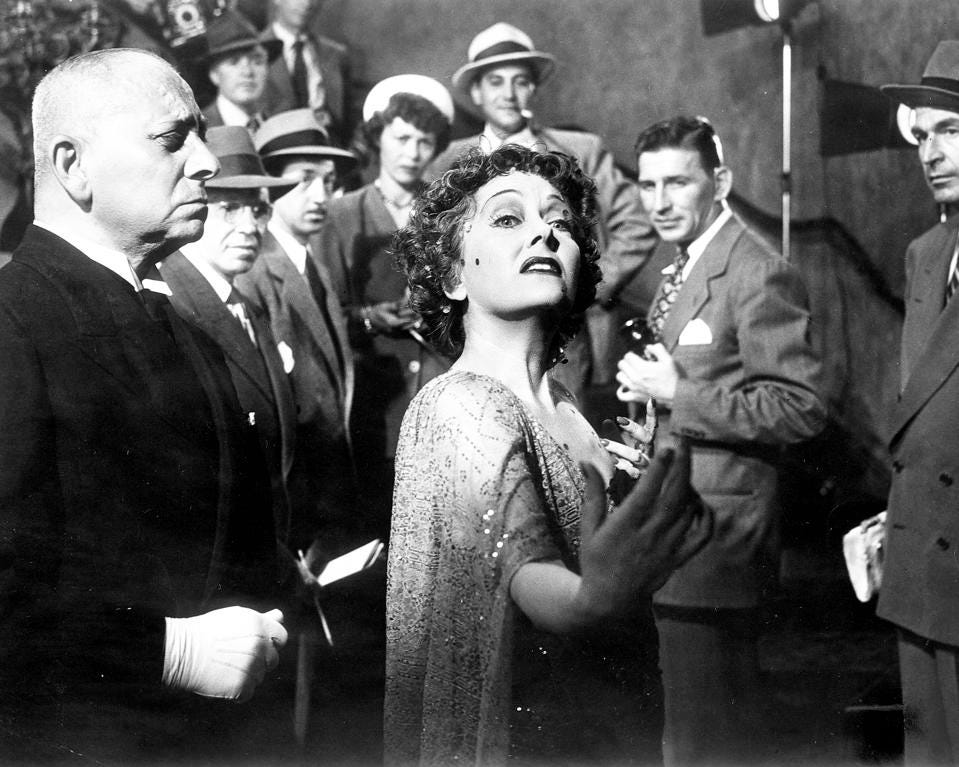
    Norma Desmond stoi w korytarzu obok drzwi

    Gloria Swanson in Sunset Boulevard:

    Norma Desmond stands down the corridor next to a doorway from which emerges a flickering light. She is a little woman. There is a curious style, a great sense of high voltage about her. She is dressed in black house pajamas and black high-heeled pumps. Around her throat there is a leopard-patterned scarf, and wound around her head a turban of the same material. Her skin is very pale, and she is wearing dark glasses.

    Norma Desmond stoi w korytarzu obok drzwi, z których wydobywa się migoczące światło. Jest małą kobietą. Jest w niej ciekawy styl, wielkie poczucie wysokiego napięcia. Ubrana jest w czarną domową piżamę i czarne czółenka na wysokim obcasie. Na szyi ma szalik w panterkę, a wokół głowy owinięty turban z tego samego materiału. Jej skóra jest bardzo blada i nosi ciemne okulary.

    Erin Brockovich:

    How to describe her? A beauty queen would come to mind — which, in fact, she was. Tall in a mini skirt, legs crossed, tight top, beautiful — but clearly from a social class and geographic orientation whose standards for displaying beauty are not based on subtlety.

    Jak ją opisać? Przychodziła mi na myśl królowa piękności — którą w rzeczywistości była. Wysoka, w mini spódniczce, ze skrzyżowanymi nogami, w obcisłym topie, piękna — ale wyraźnie z klasy społecznej i orientacji geograficznej, których standardy eksponowania piękna nie opierają się na subtelności.


    Meryl Streep w The Devil Wears Prada:

    We see more flashes of MIRANDA… $2,000 crocodile Manolos, Chanel jacket, perfect hair, fabulous Harry Winston earrings… [until] MIRANDA steps out of the elevator and for the first time we see her head-on. MIRANDA PRIESTLY, in all her glory. She is stunning, perfectly put together, a white Hermes scarf around her neck. MIRANDA’S look is so distinctive you can spot her a mile away. She is unlike any other beautiful woman, singularly MIRANDA.

    Widzimy więcej błysków MIRANDY… Krokodyl Manolos za 2000 dolarów, kurtka Chanel, perfekcyjne włosy, bajeczne kolczyki Harry’ego Winstona… [dopóki] MIRANDA wyjdzie z windy i po raz pierwszy widzimy ją na wprost. MIRANDA KAPŁAŃSKA, w całej okazałości. Jest oszałamiająca, idealnie ułożona, z białym szalikiem od Hermesa na szyi. Wygląd MIRANDY jest tak charakterystyczny, że można ją dostrzec z odległości mili. Jest niepodobna do żadnej innej pięknej kobiety, szczególnie MIRANDA.

    Meryl Streep`s character in It’s Complicated:

    JANE is mid-fifties and has embraced that fact. She knows 50 is not the new 40 and because of that, she is still described by all who know her as beautiful. Everything about this woman’s appearance screams “solid.”

    Praca domowa: Opis jedną z poniższych postaci:

    Scarlett O’Hara
    Movie: “Gone With the Wind” (1939)
    Played by: Vivien Leigh

    Sarah Connor
    Movie: “The Terminator” (1984) and “Terminator 2” (1991)
    Played by: Linda Hamilton

    Gentlemen Prefer Blondes (1953) Marilyn Monroe

    Gentlemen Prefer Blondes (1953)
    Marilyn Monroe

    Beatrix

    Beatrix “The Bride” Kiddo
    Movie: “Kill Bill Vol. 1” (2003) and “Kill Bill Vol. 2” (2004)
    Played by: Uma Thurman


    Opisy z literatury:

    “… Her skin glistening in the neon light coming from the paved court through the slits in the blind, her soot-black lashes matted, her grave gray eyes more vacant than ever.” (VLADIMIR NABOKOV, LOLITA)

    “He smiled understandingly-much more than understandingly. It was one of those rare smiles with a quality of eternal reassurance in it, that you may come across four or five times in life. It faced–or seemed to face–the whole eternal world for an instant, and then concentrated on you with an irresistible prejudice in your favor.” F. SCOTT FITZGERALD, THE GREAT GATSBY

    “Living among those white-faced women with their rosaries and copper crosses…” GUSTAVE FLAUBERT, MADAME BOVARY

    “He had a long chin and big rather prominent teeth, just covered, when he was not talking, by his full, floridly curved lips. Old, young? Thirty? Fifty? Fifty-five? It was hard to say.” ALDOUS HUXLEY, BRAVE NEW WORLD

    “His heart was like a sensitive plant, that opens for a moment in the sunshine, but curls up and shrinks into itself at the slightest touch of the finger, or the lightest breath of wind.” ANNE BRONTE, THE TENANT OF WILDFELL HALL

    “He was commonplace in complexion, in feature, in manners, and in voice. He was of middle size and of ordinary build. His eyes, of the usual blue, were perhaps remarkably cold, and he certainly could make his glance fall on one as trenchant and heavy as an axe… Otherwise there was only an indefinable, faint expression of his lips, something stealthy — a smile — not a smile — I remember it, but I can’t explain.” JOSEPH CONRAD, HEART OF DARKNESS

    Pożyteczne linki:

    Master List of Physical Description for Writers

    10 TIPS FOR WRITING PHYSICAL DESCRIPTIONS OF YOUR CHARACTERS

    The Gigantic List of Character Descriptions (70+ examples)

    This all started with a particularly sexy fairy.

    Używanie opisów fizycznych do tworzenia osobowości postaci autorstwa Taylor Simonds

    Jak opisano 50 znanych postaci kobiecych w swoich scenariuszach?

    People: physical appearance. Words describing people’s physical appearance.

    My father has a round face with chubby (fat in a pleasant and attractive way) cheeks and a droopy (long and hanging down heavily) moustache. My mother has a more pointed face and a straight nose. My younger sister is more like my father. She has an oval face and an upturned nose. My older sister is like a model. She has a slim figure and a slender (attractively slim) waist. She has a lovely complexion and beautiful sleek”, shoulder-length hair and she’s always immaculately groomed’. I feel so ordinary next to her – I’ve got coarse hair and rather broad hips, but she always says I look nice.

    My father and my two older brothers are all well-built with broad shoulders. My father is going bald but he still has a very youthful appearance for someone who is over forty. My brothers both have thick hair and bushy eyebrows. My younger brother is only two-he’s just a tiny tot, but he’s very cute. My mother’s side of the family mostly have dark hair – in fact my mother had jet-black hair when she was younger.

    A short, dumpy woman was selling flowers at a stall on the street corner.

    A portly gentleman answered the door. (fat and round; usually used of middle-aged and older men)

    A lanky youth was standing at the street corner. (tall and thin and tending to move awkwardly)

    I wouldn’t like people to see me with dishevelled hair and dirty clothes. (very untidy; used of people’s hair and appearance)

    He bears a striking resemblance to his father (looks remarkably like)

    The lady who entered the room had a very striking appearance. (unusual appearance, in a positive, attractive sense)

    Sometimes words are very restricted in what they can collocate with. The colour adjectives ginger and auburn are only used of people’s hair (not, for example, their clothes)

    Tłumaczenie:

    Mój ojciec ma okrągłą twarz z pucołowatymi policzkami i opadającymi wąsami.

    Moja matka ma bardziej spiczastą twarz i prosty nos. Moja młodsza siostra jest bardziej podobna do mojego ojca. Ma owalną twarz i zadarty nos. Moja starsza siostra jest jak modelka. Ma szczupłą sylwetkę i smukłą talię. Ma śliczną cerę, włosy do ramion, które zawsze nieskazitelnie zadbane. Czuję się przy niej taka zwyczajna – mam szorstkie włosy i dość szerokie biodra, ale ona mi zawsze mówi, że ładnie wyglądam.

    Mój ojciec i moi dwaj starsi bracia są dobrze zbudowani i mają szerokie ramiona. Mój

    ojciec łysieje, ale nadal wygląda bardzo młodzieńczo jak na kogoś, kto ma

    ponad czterdzieści lat. Obaj moi bracia mają gęste włosy i krzaczaste brwi. Mój młodszy brat ma dopiero dwa lata – jest tylko malutkim maluchem, ale jest bardzo słodki. Rodzina ze strony mojej matki ma głównie ciemne włosy – w rzeczywistości moja mama miała kruczoczarne włosy.

    Niska, przysadzista kobieta sprzedawała kwiaty na straganie na rogu ulicy.

    Drzwi otworzył korpulentny dżentelmen.

    Na rogu ulicy stał chudy młodzieniec.

    Nie chciałbym, żeby ludzie widzieli mnie z rozczochranymi włosami i brudnymi ubraniami. 

    Jest uderzająco podobny do swojego ojca.

    Pani, która weszła do pokoju, miała bardzo uderzający wygląd. (niezwykły wygląd, w pozytywnym, atrakcyjnym sensie).

    Podobało się? Chcesz więcej?

    Przypominam, że jeśli chciałbyś się zapisać na lekcje języka angielskiego w Piasecznie stacjonarnie to zapraszam serdecznie do kontaktu. Możliwe są także korepetycje online.

    Grupa na FB: https://www.facebook.com/kapitan.english

    Instagram: https://www.instagram.com/kapitan.english
    TikTok: https://www.tiktok.com/@kapitan.english
    e-korki: https://ekorki.pl/korepetycje/55907/jezyk-angielski-piaseczno.html
    https://ekorki.pl/user/61522/kapitan-english.html

    youtube: https://www.youtube.com/channel/UCQMEv05a9DjUXYCRqyEPexA
    google: https://g.page/r/CWlFonxTABdpEBA

    Lekcja #15 Angielski dla inżynierów

    Lekcja #15 Angielski dla inżynierów

    BMS – monitoring and control.

    Jesteś inżynierem, ale Twój angielski jest niewystarczający? Zapraszam serdecznie na zupełnie darmową lekcję angielskiego dla inżynierów. Zapoznamy się z podstawowymi zagadnieniami związanymi z projektowaniem inteligentnych domów i poznamy słownictwo z dziedziny monitoringu i kontroli.

    Dlaczego najnowsze technologie dotyczące tworzenia inteligentnego budownictwa są takie ważne? 

    Inteligentne budynki (=smart buildings) zwykle zapewniają zdrowszą (= healthier),  produktywną i wygodną przestrzeń dla przebywających w nich osób. Niezależnie od tego, czy jest to miejsce pracy, czy mieszkanie, z zaawansowanymi systemami sterowania temperaturą i oświetleniem (=advanced climatic and lighting controls), inteligentne budynki w znaczący sposób (=in a significant way) poprawiają jakość powietrza w pomieszczeniach i oświetlenie.

    Building management system (BMS) also known as building automation system (BAS) refers to a computer-based control system that needs to be installed within buildings to monitor and regulate the building’s electrical and mechanical equipment such as power system, lighting, and ventilation to confirm sustainability

     System zarządzania budynkiem (BMS) znany również jako system automatyki budynku (BAS) odnosi się do komputerowego systemu sterowania, który należy zainstalować w budynkach w celu monitorowania i regulacji wyposażenia elektrycznego i mechanicznego budynku, takiego jak system zasilania, oświetlenie i wentylacja, aby potwierdzić zrównoważony rozwój.

    Przydatne słówka i zwroty:

    • Enhanced air flow quality = lepsza jakość przepływu powietrza
    • Augmented thermal comfort = zwiększony komfort cieplny
    • Increased personnel security = zwiększone bezpieczeństwo personelu
    • Quality sanitation facilities = wysokiej jakości urządzenia sanitarne
    • Environmentally friendly & sustainable, green brands: eco friendly companies = przyjazne dla środowiska i zrównoważone, ekologiczne marki: firmy przyjazne dla środowiska
    • Improve air circulation = poprawienie cyrkulacji powietrza
    • Energy saving = energooszczędny
    • Building occupants = mieszkańcy budynku
    • Security vulnerabilities in industrial control systems = słabości dotyczące bezpieczeństwa w przemysłowych systemach sterowania
    • Hardcoded passwords that can’t be changed = hasła zakodowane na stałe, których nie można zmienić
    • Untold numbers of backdoors embedded in systems = niezliczona liczba backdoorów osadzonych w systemach
    • Control of building systems and services = kontrola systemów i usług w budynku
    • Graphic user interface (gui) = graficzny interfejs użytkownika (gui)
    • Real time monitoring of building operation and performance = monitorowanie działania i wydajności budynku w czasie rzeczywistym
    • Trending and logging of building operation and performance=trendy i rejestrowanie eksploatacji i wydajności budynków
    • Time scheduling of building systems=harmonogramowanie systemów budowlanych
    • Fault management and alarming=zarządzanie usterkami i alarmowanie
    • Control application programming=programowanie aplikacji sterujących
    • User event management=zarządzanie zdarzeniami użytkownika
    • Energy management and reporting (nabers)=zarządzanie energią i raportowanie (nabers)
    • Zone temperature monitoring and control = monitorowanie i kontrola temperatury w strefie
    • Zone variable air volume (vav) control to zones = strefowe sterowanie zmienną ilością powietrza (vav) do stref
    • Zone co2 monitoring and control (air quality) = strefowy monitoring i kontrola co2 (jakość powietrza)
    •  air handling unit supply air temperature control = regulacja temperatury powietrza nawiewanego do centrali
    • Air handling unit supply air flow / pressure control = regulacja przepływu/ciśnienia nawiewu centrali wentylacyjnej
    • Main plant chiller and boiler sequencing = sekwencjonowanie głównych agregatów chłodniczych i kotłów
    • Toilet, car park, kitchen and general exhaust fan control = toaleta, parking, kuchnia i ogólne sterowanie wentylatorami wyciągowymi
    • After hours building control = kontrola budynku po godzinach
    Lekcja #14 Zig Ziglar i motywacja czyli have to

    Lekcja #14 Zig Ziglar i motywacja czyli have to

    Żyjąc musimy wiele rzeczy robić i przestrzegać wielu zasad. Musimy płacić rachunki, jeździć do szkoły, musimy pracować, chodzić do dentysty, uczyć się angielskiego (sic!). Jeżeli chcemy osiągnąć sukces w jakiejkolwiek dziedzinie konieczne jest abyśmy systematycznie wykonali pewne działania, tego uczy nas Zig Ziglar (znany amerykański sprzedawca i mówca motywacyjny. Nikt jeszcze nie został uznanym sportowcem jeśli nie ćwiczył codziennie. Ja nie mam ambicji zostania żadnym atletą, ale staram się przynajmniej trzy lub cztery razy w tygodniu (a przy dobrych wiatrach nawet codziennie) biegać 5 km w Piasecznie po tzw.nieużytkach (są to po prostu chaszcze, pozostałości starej zajezdni). Jeśli czytasz to i blisko mieszkasz znajdź mnie na Stravie i możemy takie treningi (w okolicach ulicy Puławskiej i Mleczarskiej w Piasecznie) wspólnie uskutecznić.

    Have to – czym jest? Odkrywamy tajemnice, ale najpierw garść cytatów:

    “You don’t have to be great to start, but you have to start to be great”.
    “Nie musisz być świetny na początek, ale musisz zacząć by być świetny”.
    Cóż ten cytat Zig Ziglar`a oznacza? Otóż to, że nie musisz być świetny na początek (na przykład w nauce języka angielskiego), ale musisz zacząć by kiedyś zostać kimś na wysokim poziomie. Aby poznać swoją wielkość i osiągnąć doskonałość, musisz najpierw coś zrobić. Czas się obudzić, nie ma magicznych formuł, które odwróciłyby cię od tego, kim jesteś dzisiaj i by w ciągu kilku sekund stać się wielkim przedsiębiorcą lub wielkim sportowcem. Nie ma drogi na skróty.

    “The fact that many things have no explanation ought to prevent them from happening; but it doesn’t.”
    „Fakt, że wiele rzeczy nie ma wyjaśnienia, powinien im zapobiegać; ale tak nie jest”.

    “When you have a goal you have to do the work. No excuses”.

    “Be yourself. People don’t have to like you, and you don’t have to care”.
    Teraz jest niejako taka “moda”, że każdy musi być lubiany. Ale to pułapka. Najpierw musisz skupić się na lubieniu siebie, zanim sprawisz, że inni cię polubią.

    U.K. Faces £4 Billion Bill If Government Has to Bail Out Gazprom
    Wielka Brytania stanie w obliczu opłaty o wartości 4 miliardów funtów, jeśli rząd będzie musiał ratować Gazprom

    The Covid-19 Pandemic Didn’t Have to Be This Way
    Pandemia Covid-19 nie musiała tak wyglądać

    How long do teams have to replace riders?
    Jak długo zespoły muszą wymieniać zawodników?

    ‘I didn’t have to think about it’: the veterans bringing Ukrainian kids with cancer to Canada
    „Nie musiałem o tym myśleć”: weterani przywożący do Kanady ukraińskie dzieci z rakiem


    Zig Ziglar If you want something you never had

    As a historian of slavery, I know just how much the royal family has to answer for in Jamaica
    Jako historyk niewolnictwa wiem, jak bardzo rodzina królewska musi odpowiadać za to co zrobiła na Jamajce.

    GOP Congressman on oil or renewables: ‘It doesn’t have to be one or the other’
    Kongresmen GOP o ropie lub odnawialnych źródłach energii: „To nie musi być jedno albo drugie”

    Why Israel’s fear of Russia in Syria doesn’t have to drive its Ukraine policy
    Dlaczego strach Izraela przed Rosją w Syrii nie musi napędzać jego polityki wobec Ukrainy

    We don’t have to walk alone
    Nie musimy iść sami

    Cove Rangers ace: Airdrie will have to be at their best to beat us
    Champion drużyny Strażnicy Zatoki: Airdrie będzie musiał dać z siebie wszystko, aby nas pokonać

    PM Modi will have to apologise to Telangana farmers
    Premier Modi będzie musiał przeprosić rolników z Telangany

    Nie bój się gramatyki! Kapitan czuwa!

    Używamy tego zwrotu gdy mówimy o rzeczach, które są konieczne ze względu na zasady, do których przestrzegania zobowiązują nas inni ludzie:
    Mój brat w swojej pracy dużo podróżuje. (Wymaga tego jego pracodawca.)
    Co miesiąc musimy płacić czynsz. (Jest to wymagane przez wynajmującego.)
    Mówiąc o rzeczach, które uważamy za konieczne, zwykle używamy “must”.

    Używamy go również do czynności, które są konieczne ze względu na okoliczności:
    Muszę jechać autobusem do szkoły. (To jedyny sposób, w jaki mogę tam podróżować.)
    On musi żyć z niewielkich dochodów. (Otrzymuje tylko niewielką ilość pieniędzy, aby zapłacić za to, czego potrzebuje.)

    Gdy mówimy, że coś NIE jest konieczne.
    Nie musimy się spieszyć; jesteśmy wcześnie. (= Nie trzeba się spieszyć. Mamy dużo czasu.)
    Nie muszę wcześnie wstawać w niedzielę. (Mogę zostać w łóżku, jeśli chcę.)

    Gdy mówimy o czymś, co jest konieczne w danym momencie (ale nie ogólnie):
    Muszę/muszę teraz zadzwonić.
    Nie musisz nie robić tego od razu.

    To samo tylko po angielsku (nie tylko dla mocarzy!):

    1 The Present Simple forms of have to are:
    I/you/we/they have/ don’t have to go.
    He/she/it has/doesn’t have to go.
    Does he/she/it/ have to go?

    2 We use have to to talk about things that are necessary because of rules that other people oblige us to follow:
    My brother has to travel a lot in his job. (It is required by his employer.)
    We have to pay the rent every month. (It is required by the landlord.)
    To talk about things that WE think are necessary, we usually use must.

    3 We also use have to for things that are necessary because of the circumstances:
    I have to get a bus to school. (It is the only way I can travel there.)
    She has to live on a small income. (She only receives a small amount of money to pay for what she needs.)

    4 We use don’t have to to say that something is NOT necessary.
    We don’t have to hurry; we’re early. (= It’s not necessary to hurry. We have plenty of time.)
    I don’t have to get up early on Sunday. (I can stay in bed if I want.)

    5 We can use have got to with the same meaning as have to to talk about something that is necessary at one particular time (but not in general):
    I have to/I’ve got to make a phone call now.
    You don’t have to haven’t got to do this immediately.

    6 The past form of have to is had to:
    I had to do a lot of work yesterday.

    7 The future form of have to is will have to:
    He’ll have to look for another job.
    We won’t have to get tickets in advance.
    Will they have to get visas?
    Note that we cannot use have got to in past or future forms:
    Yesterday I had to work hard. (NOT had got to work hard.)

    8 We can use the Present Simple of have to to talk about the future:
    I have to do some shopping tomorrow.
    Do you have to work next weekend?

    Lekcja #13 Should z Ukrainą, Rosją i covidem. Co powinniśmy?

    Lekcja #13 Should z Ukrainą, Rosją i covidem. Co powinniśmy?

    Powinniśmy oświetlić powstańczy krzyż w Henrykowie – Urocze.

    Wszyscy dookoła nam mówią że coś powinniśmy. Powinniśmy iść na wojnę, powinniśmy zażywać suplementy, powinniśmy nosić dodatkową odzież na twarzy, powinniśmy chronić nasze inwestycje, nie powinniśmy szerzyć nienawiści w internecie. Aż głowa boli od tego natłoku rad, które jak wiadomo (nie)zawsze są bardzo pożyteczne (zwłaszcza te nieproszone). Każdy najmądrzejszy mówi nam co jest dla nas dobre a co jest złe. A co media w marcu 2022 mówią, że powinniśmy? Przyjrzyjmy się temu.
    W tej lekcji zbadamy jak politycy wypowiadają się o konflikcie z Ukrainą, oraz jaki jest idealny radny z Piaseczna? Jakie projekty obywatelskie piaseczyńscy włodarze powinni przyjąć?

    Najpierw trochę przykładów z życia a potem (dla tych co wytrwają) gramatyka.

    Putin may ramp up his war in Ukraine – here’s how Nato should respond.
    Putin może nasilić swoją wojnę na Ukrainie – tak powinno odpowiedzieć NATO.

    If no one else is wearing a mask, should you?
    Jeśli nikt inny nie nosi maski, czy ty powinieneś?

    Judge asks if second Trump term should matter in case over his taxes.
    Sędzia pyta, czy druga kadencja Trumpa powinna mieć znaczenie w sprawie jego podatków.

    Should Nato become engaged in the war in Ukraine?
    Czy NATO powinno zaangażować się w wojnę na Ukrainie?

    Why You Should Probably Skip ‘Is It Cake?,’ Netflix’s Newest Reality Baking Show.
    Dlaczego powinieneś pominąć „Czy to ciasto?”, najnowszy program Netflixa dotyczący Pieczenia Na Żywo?

    Boris Johnson: Ukraine, not Russia, should host Euro 2028.
    Boris Johnson: Ukraina, a nie Rosja, powinna gościć Euro 2028.

    Origo CEO says securing emails should be “base-level security” for advice firms.
    Dyrektor generalny Origo mówi, że zabezpieczanie wiadomości e-mail powinno być „bezpieczeństwem na poziomie podstawowym” dla firm doradczych.

    Strange waves in the sun are travelling far faster than they should be.
    Dziwne fale na słońcu poruszają się znacznie szybciej niż powinny.

    James Blunt says more should be done to moderate online hate, gives tips on dealing with trolls.
    James Blunt mówi, że należy zrobić więcej, aby złagodzić nienawiść w Internecie, udziela wskazówek, jak radzić sobie z trollami.

    Spring cleaning should include to your social media feeds, experts say.
    Eksperci twierdzą, że wiosenne porządki powinny uwzględniać Twoje kanały w mediach społecznościowych.

    Higher Inflation, More Volatility: How Should Investors React?
    Wyższa inflacja, większa zmienność: jak powinni reagować inwestorzy?

    Ukraine should provide Japan’s wake-up call.
    Ukraina powinna być oprzytomnieniem dla Japonii.

    What should you do when your partner starts gaining weight?
    Co powinieneś zrobić, gdy twój partner zacznie przybierać na wadze?

    Oscars 2022: Who will win – and who should?
    Oscary 2022: Kto wygra – a kto powinien?

    2022 nfl draft: what should the Texans do with the third overall pick?
    Projekt nfl 2022: co powinni zrobić teksańczycy z trzecim wyborem?
    Should you do cardio before or after weights?
    Czy powinieneś ćwiczyć cardio przed czy po ćwiczeniach z obciążeniem?

    Markets may be peaking. What should you do to protect your investments?
    Rynki mogą osiągać szczyt. Co powinieneś zrobić, aby chronić swoje inwestycje?

    Caught Covid? Expert on what you should and shouldn’t do when self-isolation isn’t mandatory
    Złapałeś Covida? Ekspert od tego, co należy, a czego nie należy robić, gdy samoizolacja nie jest obowiązkowa.

    Find Out Now, What Should You Do For Fast Digital Identification Market by 2028
    Dowiedz się teraz, co powinieneś zrobić dla rynku szybkiej identyfikacji cyfrowej do 2028 r.

    What should you do in case of a nuclear explosion? U.S. government updates guidance.
    Co powinieneś zrobić w przypadku wybuchu jądrowego? Rząd USA aktualizuje wytyczne.

    Inne przykłady:

    A: What’s the matter?
    B: I’ve got a cut on my finger.
    A: You should put a plaster on it.

    Zadanie 1:

    Henry is cooking a meal. Give him some useful advice.

    Cut the onions as small as possible.
    Use fresh herbs and fresh vegetables.
    Don’t put in too much salt and pepper.
    Wait until the water boils before you put the vegetables into it.
    Heat the oven before you put the meat in.
    Cut the meat into four equal slices.

    Don’t leave the meat in the oven for more than one hour.
    You shouldn’t leave the meat in the oven for more than one hour.
    Teraz Twoja kolej!

    Powinniśmy oświetlić powstańczy krzyż w Henrykowie – Urocze.

    Zadanie 2:

    What do you think I should do before I buy a bike?
    I don’t think you should decide too quickly.
    You should check the condition of the bike.
    You should ask somebody who knows about bikes to look at the bike for you.
    You shouldn’t buy one simply because it looks nice!
    You should be very careful.
    Dodaj coś od siebie!

    Zadanie 3:
    Jaki powinien być idealny radny? Przetłumacz na angielski:

    Powinniśmy oświetlić powstańczy krzyż w Henrykowie – Urocze.
    Powinniśmy zorganizować olimpiadę dla seniorów z okazji 100 – lecia piaseczyńskiego sportu.
    Powinniśmy zrobić bieg Kobiet na dystansie 5 km dla mieszkanek Piaseczna.
    Powinniśmy zrobić cykl rodzinnych warsztatów: Ogrody społeczne w Józefosławiu.
    Radny powinien zaakceptować projekt: “Wiszące mosty dla wiewiórek w naszej gminie”.
    Radny powinien zaakceptować projekt: “Złotokłos – STREFA RELAKSU i HISTORII przy STACJI kolejki wąskotorowej Złotokłos – ogólnodostępny DWORZEC Kolejki Wąskotorowej”

    Zródlo: https://piaseczno.budzet-obywatelski.org/projekty

    Gramatyka:

    Używamy „powinienem” lub “powinniśmy” gdy chcemy powiedzieć, co jest dla nas dobre np.
    Powinienem iść do domu. Jest północ. Powinniśmy zaprosić ich na posiłek.

    Lub gdy mówimy, że coś jest dla nas złe:
    Nie powinienem wydawać tyle pieniędzy. Korzystamy z tego, że powinieneś/nie powinieneś udzielać porad. Powinieneś poszukać lepszej pracy. Nie powinieneś jechać tak szybko.

    Możemy też poprosić o radę:
    Czy powinienem wpisać swoje imię w tym miejscu? Co mam powiedzieć Helen? Potrzebuję nowego paszportu. Gdzie powinienem pójść?

    Możemy w ten sposób wyrazić opinię:
    Myślę, że powinniśmy kupić nowy samochód. Myślę, że nie powinieneś wierzyć we wszystko, co mówi.

    Możemy także poprosić o radę:
    Nie odpowiedział na mój e-mail. Myślisz, że powinienem do niego zadzwonić? Jak myślisz, co powinienem dać Tomowi na urodziny?

    Should, shouldn’t

    We use should with an infinitive (do, go, etc.):
    I should do some work tonight.
    The form of should is the same for all persons:
    I/you/he/she/it/we/they should go.

    The negative form is shouldn’t:
    You shouldn’t sit in the sun all day.
    They shouldn’t spend so much money.

    We use I should or we should to say what is a good thing for us to do:
    I should go home. It’s midnight.
    We should invite them for a meal.
    We use I or we shouldn’t to say that something is a bad thing for us to do:
    I shouldn’t spend so much money.
    We use you should/shouldn’t to give advice.
    You should look for a better job.
    You shouldn’t drive so fast.

    Should is not as strong as must or have to.
    Compare:
    You should eat more fruit. (It’s a good idea.)
    ‘You must eat more fruit,’ said the doctor. (It’s very important.)

    We use the question form should I/we …? to ask for advice:
    Should I write my name in this space? What should I say to Helen? I need a new passport. Where should I go?

    We can say I think we should, I don’t think you should, etc. to give an opinion:
    I think we should get a new car. I don’t think you should believe everything he says.

    We can use do you think I should …? to ask for advice:
    He hasn’t replied to my email. Do you think I should phone him?
    What do you think I should give Tom for his birthday?

    Pamiętaj, że jeśli chciałbyś się zapisać na lekcje języka angielskiego w Piasecznie stacjonarnie to zapraszam serdecznie do kontaktu. Możliwe są także korepetycje online.